Wildlife corridors
Wildlife corridors are often situated in verges of the main thoroughfares of Chorley and play a vital role in maintaining and improving biodiversity.
A wildlife corridor helps to bridge the gap between habitats, which helps to restore and preserve biodiversity and allows movement between important habitats to maintain genetic diversity in wildlife populations. It is important that we support insects at all stages of their life cycle and plants found in wildlife corridors such as docks, sorrels and thistles are important larval food plants. These corridors also provide an opportunity for airborne, pollinating insects to move around by flying from one to another.
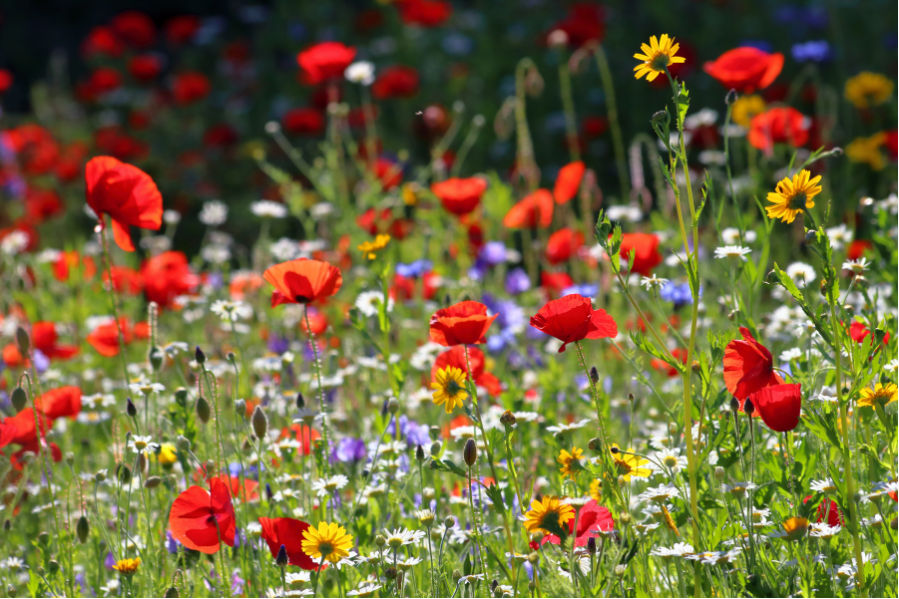
To help support our wildlife, grass cutting in these areas is reduced as part of our maintenance programme as it also allows any natural wildflowers within the seed bank to flourish.
We will continue to regularly maintain the verge areas immediately next to the roads or footpaths to maintain visibility and safety for motorists, but otherwise we plan to let nature take its course and give them a helping hand by planting supplementary bulbs. We planted a further 8000 wildflower bulbs in autumn 2024, to introduce greater diversity whilst adding colour and intrigue to these vital habitats for insects and pollinators.
 Climate Change Chorley